 Ekrem Imamoglu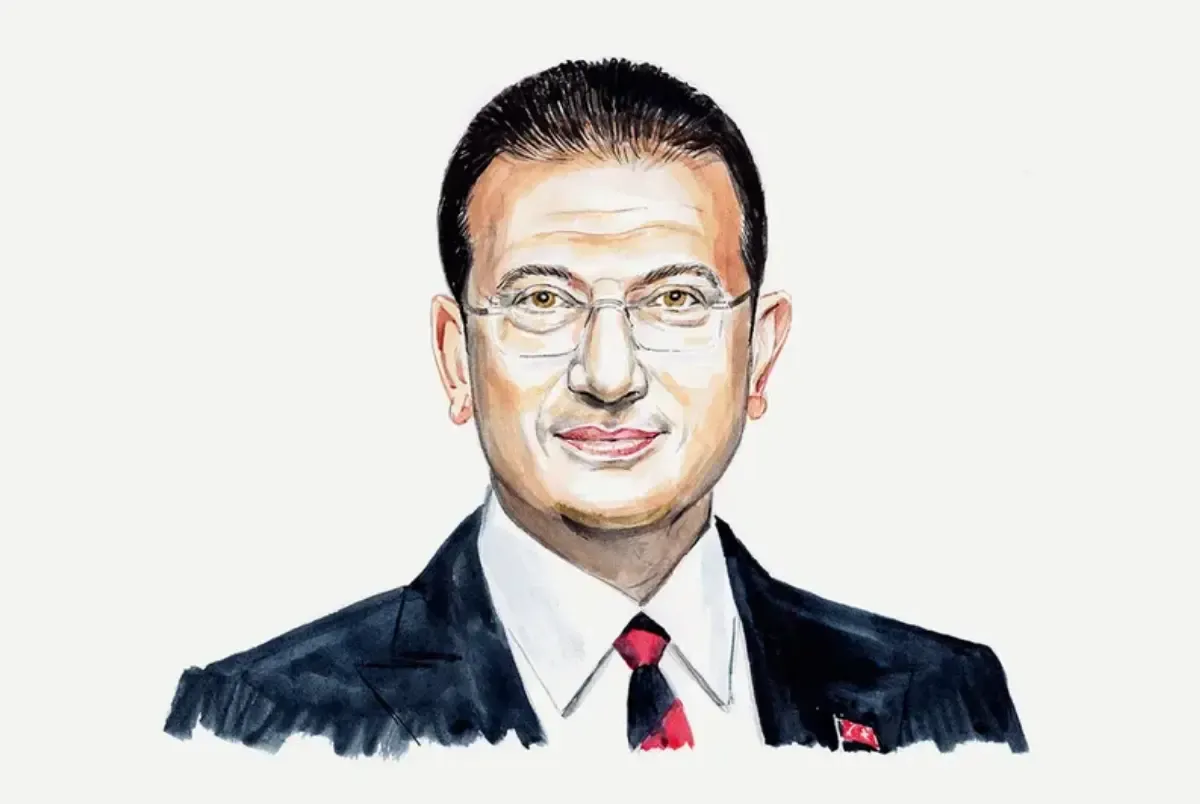
In July some 30 members of the Kurdistan Workers’ Party (PKK), an armed group designated as a organisation by the European Union and America, laid down their weapons in a symbolic ceremony in northern Iraq. The disarmament under way is welcome and marks a historic opportunity to break a cycle of violence that has long burdened the country’s political system, slowed economic progress and deepened divisions. It also presents a golden opportunity for Turkey to reframe its regional role.
For decades the Kurdish conflict, which began with a separatist insurgency by the, has been an obstacle to Turkey’s greater democratisation. There is irony in the fact that the disarmament process is unfolding even as authoritarianism under President Recep Tayyip Erdogan is growing, and the political opposition is under great pressure. Earlier this year several mayors belonging to the Republican People’s Party (CHP)—myself included—were jailed on politically motivated charges. That sent a chilling message to the opposition and further narrowed the space in Turkey for democratic engagement.
A sense of growing repression has a bearing on the peace process. It unfolded without the kind of inclusive political framework needed to deal with the Kurdish population’s long-standing political, cultural and economic grievances. Nor has there been a real strategy for engaging with -linked groups operating across Iraq, Syria and Iran— without which key regional dimensions of the conflict remain unaddressed.
The government should have begun an open and inclusive national dialogue. Instead, it opted for closed-door negotiations. That squandered a chance to build legitimacy and trust.
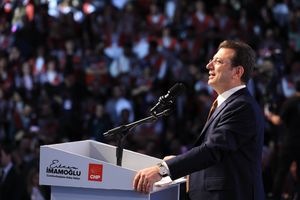
For the CHP, which has chosen me for its candidate for president, the Kurdish issue is not solely a matter of national security but also of democracy, justice, development and institutional reform. We advocate a long-term strategy to end violence, promote development and redress deep-seated inequalities.
We want equal citizenship, democratic participation, accountability and an inclusive future in the republic for all Turkish nationals.
From the moment the declared its intention to disband, we put forward two key proposals. First, we called for the immediate establishment of a parliamentary commission to ensure that the peace process is guided by legality, civic participation and institutional oversight. A commission has now been set up, convening for the first time on August 5th. It is a step in the right direction. Many fear the government’s narrow security agenda will dominate deliberations; we are nonetheless taking part to ensure that broader issues of democratisation and social cohesion are put squarely on the agenda. We need a transparent process, not a body that rubber-stamps decisions by Mr Erdogan’s coalition.
Second, disarmament must go hand in hand with a return to democratic norms. Lasting peace cannot happen in a system marked by partisanship and democratic backsliding. The institutions that should confer legitimacy, parliament and civil society, have long been sidelined, and the judiciary has been politicised.
Yet peace for our people requires legitimacy, not repression.
My own experience illustrates Turkey’s contradictions. In March, serving as mayor of Istanbul and about to be endorsed as my party’s presidential candidate, I was jailed on politically motivated charges, among them corruption and aiding terrorists. This latter accusation was based on claims that city-council candidates on our electoral list had links to a platform allegedly aliated with the PKK, despite their having been vetted and approved by the Supreme Election Council before being elected.
Meanwhile, a government claiming to seek peace has systematically targeted elected Kurdish representatives. Dozens of mayors from the Peoples’ Democratic Party (HDP, now the DEM Party), have been dismissed and replaced with state-appointed figures. Rulings from the European Court of Human Rights, including an order to release two former co-chairs, Figen Yuksekdag and Selahattin Demirtas, remain unheeded.
Democracy’s erosion under Mr Erdogan is not just a domestic concern. It undermines Turkey’s full potential abroad, at a moment when the world needs reliable partners in areas like security, energy and migration.
Turkish foreign policy, reactive and driven by internal political calculations, lacks consistency. Dealings with neighbours swing between confrontation and rapprochement.
A shifting regional landscape, not least with the collapse of the Assad regime in Syria, oers a chance for real engagement in support of peace, reconciliation and reconstruction in the Middle East. Turkey can do much—if it pursues a foreign policy rooted in justice and inclusivity for all communities. We can also work more with the in the Middle East, but only with a foreign policy grounded, at home, in democratic legitimacy and the rule of law. Upholding fundamental rights could also revive Turkey’s stalled accession process. Turkey’s geographic position, historical richness and democratic legacy equip it as a force for stability and progress. But a policy abroad shaped by Mr Erdogan’s personal ambition and polarisation of politics at home frustrates that
Turkey stands at an inflection point. Its domestic governance will more and more shape its relevance abroad. To be a responsible regional power, Turkey must restore the integrity of its democratic institutions. Only then can it act as a trusted partner in an increasingly unstable world. As the CHP’s candidate for president, I am committed to leading my country’s democratic renewal.
A new government anchored in legitimacy and the rule of law will responsibly engage with the world with clarity and resolve.